FOR ESTABLISHED COMPANIES

Your existing records
may create new value.

A company with years of completed projects, technical records and documented operations may possess material of interest to specialist AI acquisition teams.

We help establish whether those records may qualify for a licensing discussion.

🇰🇪   FEATURED CASE STUDY · KENYA

A Kenyan developer. A structured introduction.

We discussed the firm's operations and long project history with a director, reviewed the records described, prepared a focused company overview and coordinated a buyer introduction.

The company reported a substantial history of development work, technical design files and project revisions. These records may help a buyer understand how real projects evolved from plans through approvals and delivery.

~500employees, as reported
20+years operating
CAD/BIMand revision history

An introduction has taken place; no completed licensing sale or payment is claimed.

Original photograph of a rounded glass building under construction beside a yellow tower crane
Illustrative project photograph

SECTORS WHERE RECORDS MAY BE RELEVANT

Established teams. Meaningful operating history.

The potential lies in years of documented work, not simply the final deliverable.

Construction

Manufacturing

Engineering

Energy & Utilities

Hospitality & Facilities

THE RECORDS

A rich and well-organised record set.

  • Design and engineering files, including CAD/BIM
  • Revisions, approvals and changes over time
  • Project documentation such as RFIs, submittals and change orders
  • Site records, inspections and quality checks
  • Operational records, maintenance and procurement histories

SYSTEMS & DATA TYPES · EXAMPLES

Where these records are often found.

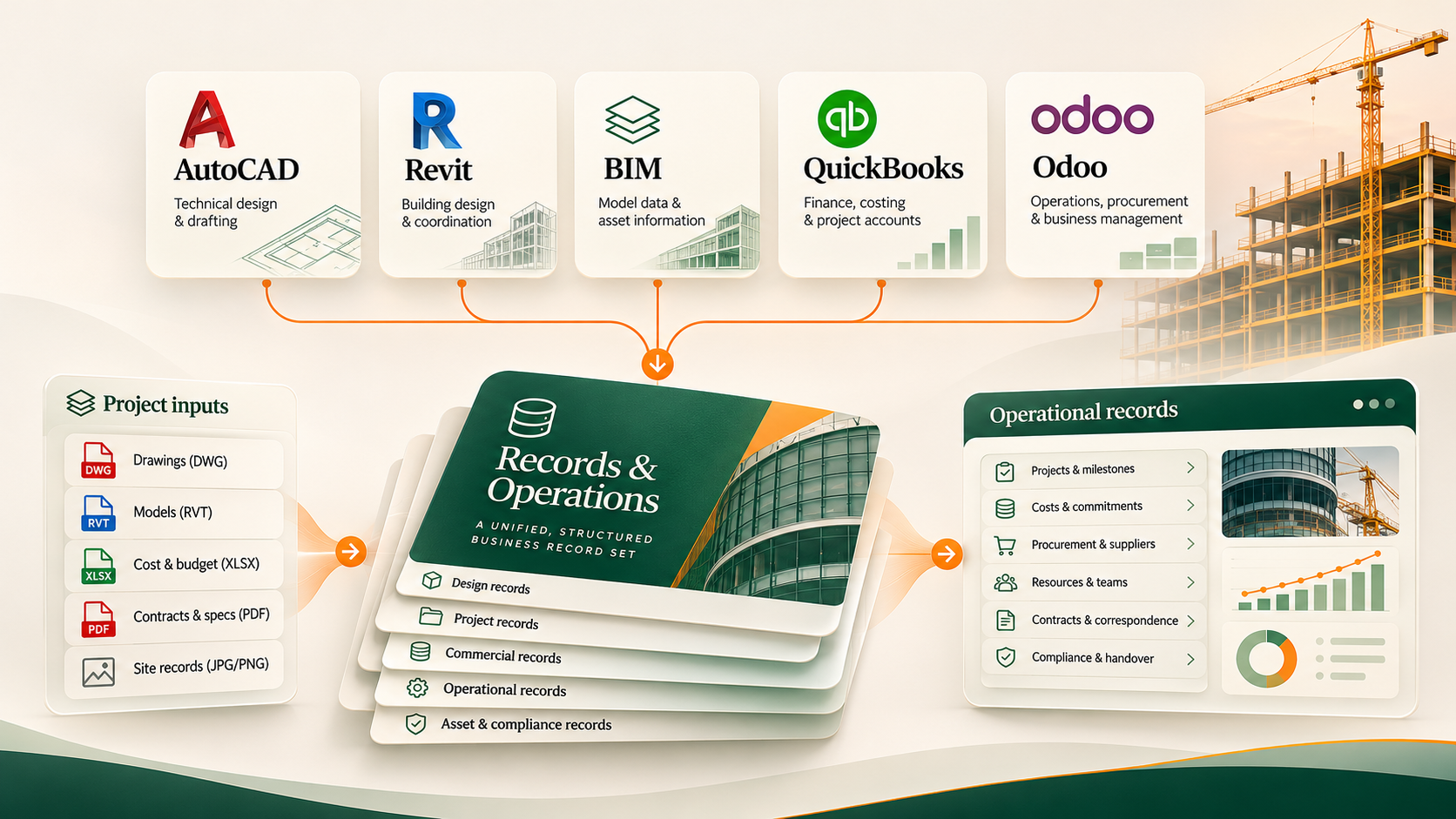
Software names are examples only. A company’s suitability depends on the actual records and rights available, not the presence of a particular programme.

Illustrative workflow showing example business systems such as AutoCAD, Revit, BIM, QuickBooks and Odoo feeding into records and operations, with project inputs and operational records panels
Illustrative systems-and-records workflow. Examples only.

How systems and records connect

Companies often work across design, finance, operations and project-management tools. What matters is not the software alone, but the quality, continuity and rights associated with the records those systems contain.

  • Design and technical files
  • Revision and change logs
  • Project and approval records
  • Operational records and asset histories
A company may use different systems. Suitability depends on the actual records, operating history and licensing rights available.

A CLEAR, FOUR-STEP PROCESS

From discussion to buyer-led review.

01

Initial call

Understand the company, systems and general record history. No raw files.

02

Assessment

Consider preliminary fit against the requirements of a relevant buyer.

03

Overview

Prepare a concise, non-sensitive company and record description.

04

Introduction

Coordinate a direct introduction. Subsequent diligence and commercial terms are buyer-led.

Confidentiality and anonymised preliminary review.

We can assess potential fit using high-level or anonymised details. The business decides whether and when to disclose more information; Talaabo does not take possession of the underlying records.

Interested in exploring your records?

We can establish whether an initial assessment is worthwhile.

Request a Call